
General concepts
HEC stands for High Emissions Collateral. On HEC markets, borrowers can mintUSG against productive collateral that produces liquid rewards, such as Curve Finance LP tokens.
On these markets, it is possible to borrow interest-free in exchange for a portion of the collateral’s rewards, while USG is above a predefined price threshold. The rewards deduction effectively acts as a payment for the loan, and non-deducted rewards are streamed back to borrowers.
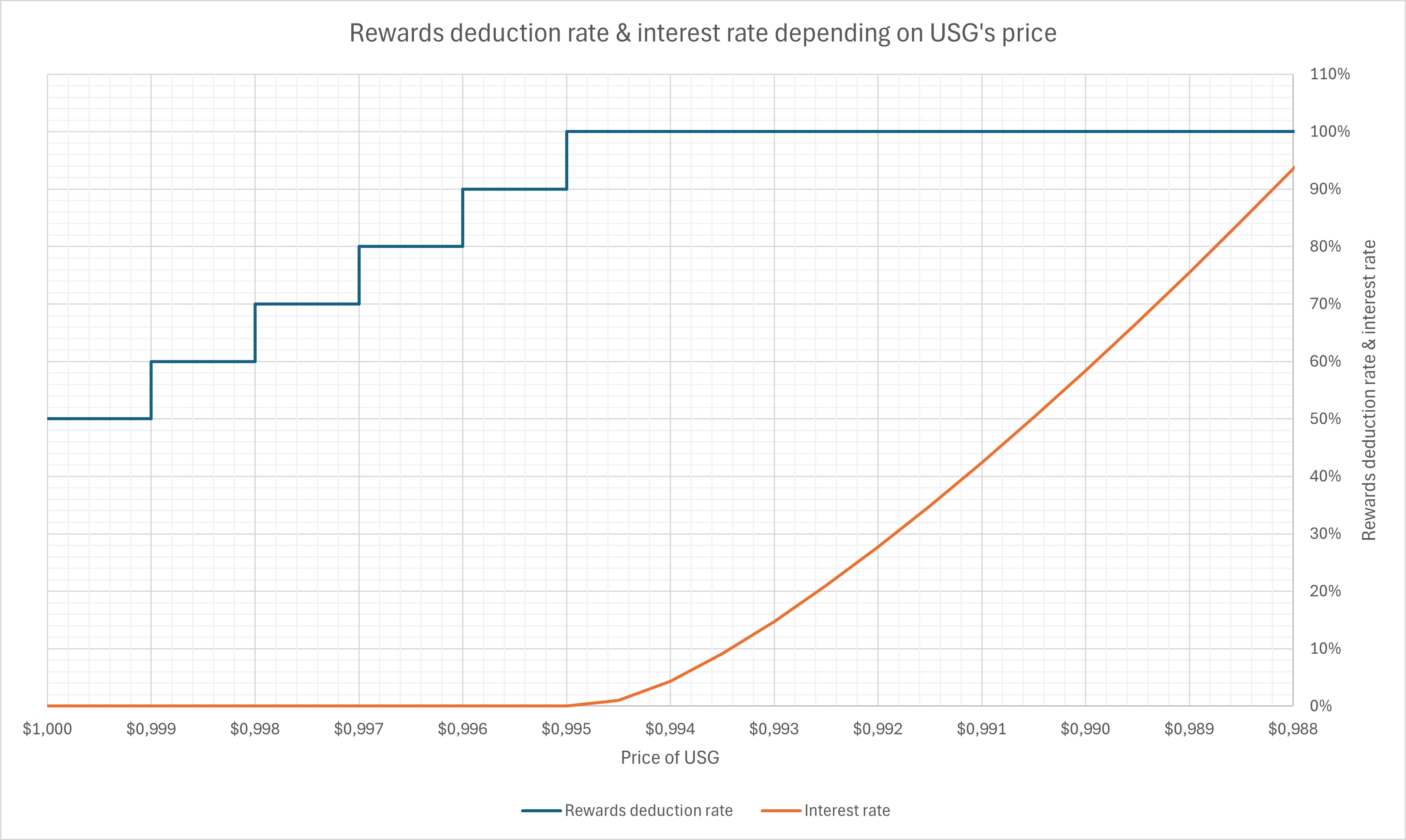
As the price of USG decreases, the rewards deduction rate increases. When the price falls below the price threshold, 100% of the collateral’s rewards are deducted, and a dynamic interest rate that goes up as USG’s price goes down is charged. No interest is charged while USG stays above the price threshold.
The price threshold can vary across HEC markets depending on the collateral’s nature. Additionally, following a DAO vote, the price threshold can be adjusted, and an HEC market can become an LEC market (and vice versa).
To summarize, on HEC markets:
USGcan be borrowed interest-free while its price is above the market’s price threshold;- The rewards deduction rate goes up as
USG’s price goes down; - Interest is charged while
USG’s price is below the market’s price threshold.
Example
Below is an example of how the rewards deduction rate and the interest rate behave on HEC markets, depending onUSG’s price.
Rewards deduction
Interest rate
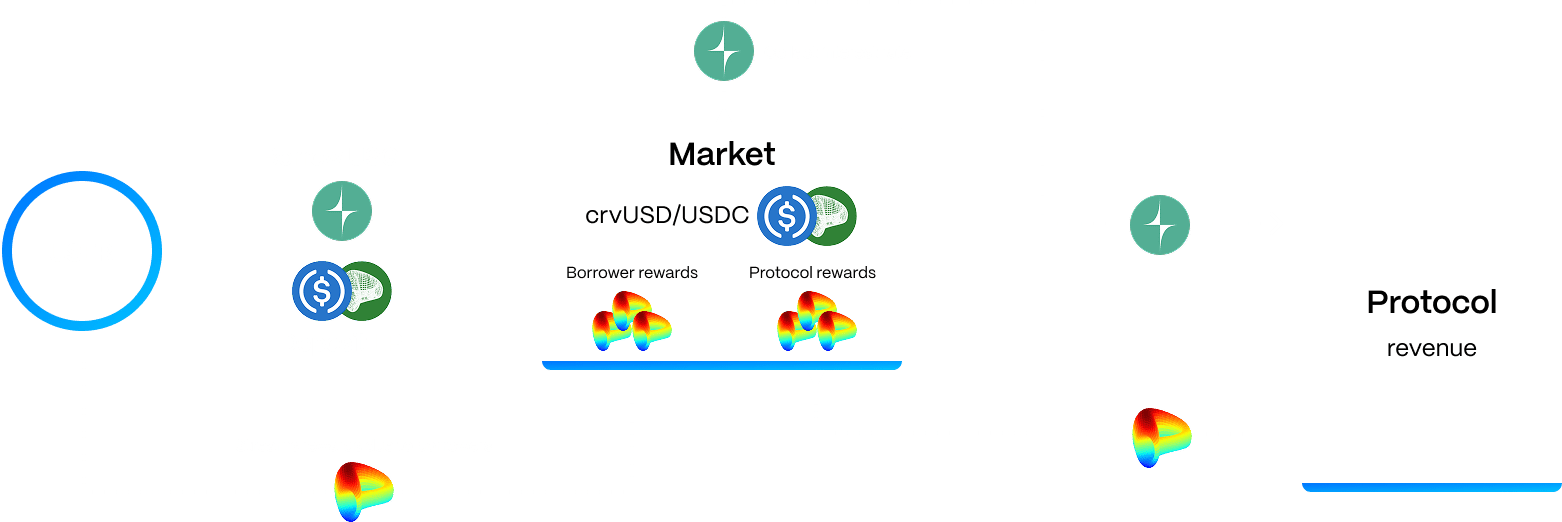
Financial flows
The figure below shows the financial flows on HEC markets.